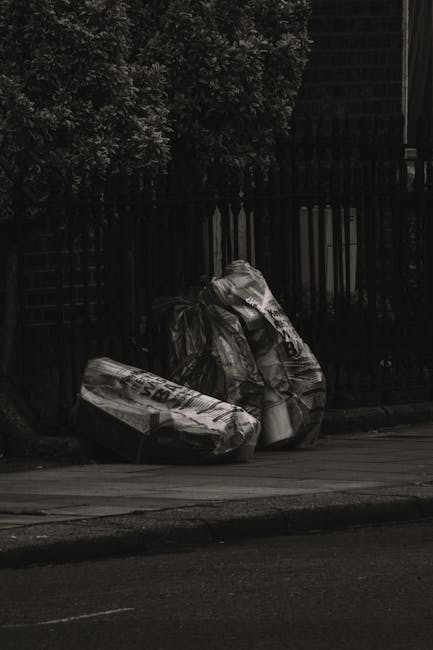
Coney Hall Parade rubbish removal guide for households
If you are trying to clear a spare room, shift an old sofa, or finally deal with the pile that has been growing in the garage, this Coney Hall Parade rubbish removal guide for households is for you. Home clear-outs sound simple at first, then suddenly you are staring at broken furniture, bagged clutter, dusty loft boxes, and one awkward question: where is all of this meant to go?
This guide explains how household rubbish removal works, what to do before booking, how to avoid common mistakes, and when it makes sense to use a professional service. It is written for everyday homeowners, landlords, tenants, and families who want a clean, tidy result without the stress. To be fair, most people do not need more theory - they need a clear plan that actually works on a normal day in Coney Hall Parade.
Along the way, you will also find practical links to useful pages on our site, including general waste removal support, house clearance, and pricing and quotes so you can move from planning to action without faffing about.
Expert summary: The smartest rubbish removal jobs start with sorting, safe handling, and a clear idea of what should be removed, reused, recycled, or treated separately. That simple preparation saves time, reduces confusion, and often keeps costs more predictable.
- Learn what household rubbish removal usually includes.
- Understand the steps that make collection day smoother.
- Compare options for bulky items, mixed waste, and larger clear-outs.
- See when it is sensible to book a professional team rather than DIY it.
- Use the checklist and FAQs at the end to avoid last-minute issues.
Table of Contents
- Why Coney Hall Parade rubbish removal guide for households Matters
- How Coney Hall Parade rubbish removal guide for households Works
- Key Benefits and Practical Advantages
- Who This Is For and When It Makes Sense
- Step-by-Step Guidance
- Expert Tips for Better Results
- Common Mistakes to Avoid
- Tools, Resources and Recommendations
- Law, Compliance, Standards, or Best Practice
- Options, Methods, or Comparison Table
- Case Study or Real-World Example
- Practical Checklist
- Conclusion
- Frequently Asked Questions
Why Coney Hall Parade rubbish removal guide for households Matters
Household rubbish removal is not just about getting rid of things. It is about making your home safer, easier to live in, and less cluttered under the day-to-day pressure of family life. A clear hallway, an uncluttered loft, or a garage that can actually fit a car again - those small wins make a real difference.
In a place like Coney Hall Parade, many homes build up waste gradually. A broken wardrobe gets pushed into a corner. The old dishwasher sits there for a week or two. Then the garden bags start piling up, and suddenly the whole job feels bigger than it should. That is usually when people feel stuck. Truth be told, clutter has a habit of getting louder the longer you leave it.
This guide matters because household waste is rarely all one type of rubbish. You may have general junk, reusable furniture, broken appliances, garden waste, cardboard, renovation offcuts, and maybe a few items that need special handling. When you know how to sort it properly, the job becomes much easier and usually safer too.
There is also the time factor. If you are working, looking after children, or managing a move, you may not have a whole weekend to spend loading a car twenty times. A structured approach gives you a way to clear space without losing your entire Saturday.
If the job has become a bit too large to handle alone, it can help to compare household-focused services such as home clearance, flat clearance, or more specific options like furniture disposal. The right choice depends on the type and volume of waste, not just the fact that it needs to go.
How Coney Hall Parade rubbish removal guide for households Works
Most household rubbish removal jobs follow the same broad pattern. You identify the items, decide what can be kept or reused, gather the waste in one place, then arrange collection or removal. That sounds simple because it is simple - but only if you plan it properly.
For a typical household, the process usually looks something like this:
- Walk through each room and list what needs to go.
- Separate ordinary rubbish from reusable items and anything hazardous.
- Check whether bulky items need disassembly before moving.
- Estimate how much space the waste will take.
- Choose the most practical removal method.
- Make sure the access route is clear on the day.
- Confirm payment details, timings, and any special handling needs.
If you are dealing with a few black bags and some cardboard, you may only need a small collection. If you are clearing a loft, garage, or an entire property, a larger service such as house clearance or loft clearance may be more appropriate. And if the issue is mostly overgrown cuttings, old plant pots, or outdoor clutter, a garden clearance approach is often the cleaner fit.
The real trick is to avoid mixing everything together too early. Once waste is piled into one heap, sorting becomes slower and messier. You end up lifting the same object twice. Nobody enjoys that. Nobody.
It also helps to think in categories. General domestic waste, recyclable materials, electrical items, textiles, large furniture, and appliance waste all follow different handling expectations. A bit of pre-sorting keeps the job tidy and reduces the chance of items being rejected at the last minute.
Key Benefits and Practical Advantages
There are several reasons households in Coney Hall Parade choose professional rubbish removal rather than trying to manage everything themselves.
- Less lifting and carrying: Large or awkward items can be hard to move safely, especially down stairs or through narrow hallways.
- Faster turnaround: A team can often remove a mixed load in far less time than a family could manage alone.
- Better sorting outcomes: Useful items can be separated from general waste where appropriate, which supports recycling and reuse.
- Less disruption: The home returns to normal more quickly, which matters when you are preparing for guests, a move, or decorating.
- Reduced risk of damage: Careful removal lowers the chance of scratched walls, broken fittings, or crushed boxes.
- More suitable for bulky waste: Mattresses, sofas, wardrobes, fridges, and appliances can be tricky to transport without the right vehicle and handling.
There is another benefit that is easy to overlook: mental relief. Once the clutter is gone, people often notice the space differently. The room feels calmer. The floor is visible again. Even the air seems a little lighter. Sounds dramatic, maybe, but you feel it.
If you are trying to deal with bulky household items, pages like mattress and sofa disposal and fridge and appliance removal can be useful starting points because these items need more than a standard bin-day solution.
Who This Is For and When It Makes Sense
This kind of rubbish removal guide is useful for a wide range of people, not just those doing a full house clear-out.
Typical household situations
- Spring cleaning that got out of hand.
- End-of-tenancy clear-outs.
- Moving home and needing to reduce load before packing.
- Garage or loft decluttering after years of storage.
- Old furniture replacement projects.
- Garden waste after a tidy-up or landscaping job.
- Family homes where bulk waste has gradually accumulated.
When a professional service is especially useful
It makes sense to book help if the waste is heavy, awkward, time-sensitive, or simply too much for your vehicle. It also makes sense if you want one visit to solve the problem rather than a long series of council-tip runs and borrowed car journeys. Let's face it, not everyone has a van, a spare pair of hands, and a dry weekend morning all lined up.
You may also want professional support if the items include anything that needs special disposal. For example, some electricals, old fridges, or materials that are classed as hazardous should be handled carefully. In those cases, general household rubbish removal is not the whole story.
Step-by-Step Guidance
Here is a practical way to organise a household rubbish removal job without overcomplicating it.
1. Start with a room-by-room sweep
Begin in the loft, garage, spare room, hallway, or wherever waste tends to gather. Write down everything that needs to go. Do not trust memory alone. The moment you start carrying things, you will forget the odd lamp base or broken shelf panel tucked behind something else.
2. Sort by type
Keep these groups separate where possible:
- General household rubbish
- Recyclables
- Bulky furniture
- Electrical items and appliances
- Garden waste
- Potentially hazardous items
- Sentimental or reusable items you may still want to donate or keep
3. Measure or estimate the load
You do not need an exact engineering calculation here. A rough sense of quantity is enough. Is it a few bags, a van load, or a full property clearance? That estimate helps with planning and avoids awkward surprises on collection day.
4. Check access
Look at stairways, shared entrances, tight corners, and parking. If an item has to come through a narrow passage, it may need to be dismantled first. A wardrobe is much less dramatic when split into sections. Much less dramatic.
5. Separate anything that needs special treatment
Appliances, fridges, mattresses, and certain waste types often require different handling. If in doubt, treat them separately until you have checked the removal route. It is better to pause for ten minutes than to create a disposal headache later.
6. Book the right service
Choose a service that matches the scale of the job. A small waste collection is fine for modest clutter, but larger projects may need a home clearance or even a more targeted package like garage clearance. If you have mixed domestic waste, a broader waste removal option may be the easiest route.
7. Prepare the items for removal
Bag loose rubbish, tape up small sharp edges, remove contents from drawers if needed, and keep the path to the collection point clear. A little prep makes collection quicker and safer.
8. Walk the route with the team
On the day, point out fragile areas, low ceilings, or any item that needs extra care. This is one of those small things that prevents big annoyances.
Expert Tips for Better Results
From experience, the households that get the smoothest result tend to do a few simple things well.
- Do a fast pre-sort before booking. Even ten minutes of sorting can make the job easier to quote and faster to remove.
- Keep reusable items separate. If an item is still usable, do not bury it under general waste. It may be better handled through furniture clearance or another more selective service.
- Photograph bulky waste. A few clear pictures can help when asking for pricing guidance.
- Use strong bags and sturdy boxes. Weak packaging tears at the worst possible time, usually in the hallway.
- Plan around access and parking. If access is awkward, allow extra time.
- Separate electricals early. Appliances and plug-in items should not be mixed randomly into general rubbish.
A small but useful habit: keep one "decision box" for items you are unsure about. That way, you do not keep stopping the whole process to reconsider a single object. Sorting momentum matters. Once it dies, the job feels twice as large.
If you want a service that has a strong focus on recycling and responsible handling, it is worth reviewing recycling and sustainability. Even a straightforward clear-out can be done with a better disposal mindset.
Common Mistakes to Avoid
Household rubbish removal goes wrong in a few predictable ways.
Leaving everything until the last minute
If you try to sort a full room the evening before collection, you will probably miss things or panic-pack the wrong items. Start earlier than you think you need to.
Mixing hazardous and general waste
Paint tins, chemicals, batteries, sharp objects, and some electrical items should never be treated like everyday rubbish. Keep them apart and check the right route for disposal.
Underestimating bulky items
One sofa can look harmless in the room. Then you try to move it through the hallway and realise it behaves like an unwieldy, upholstered sheep. Not ideal. Measure or inspect big items before the day arrives.
Forgetting access issues
Parking restrictions, locked gates, shared entrances, and tight staircases can all slow things down. Small detail, big difference.
Not checking what is included
Always confirm whether the service covers loading, lifting, special items, or extra separation work. Clear expectations make for calmer collection days.
Assuming all waste is the same
Household rubbish, garden waste, appliances, and furniture each have different handling needs. Treating them all as one pile usually creates extra work.
Tools, Resources and Recommendations
You do not need a huge toolkit to manage household rubbish removal well. A few practical items make a surprising difference.
- Heavy-duty bin bags for loose rubbish.
- Marker pens and tape for labelling boxes.
- Work gloves for handling dusty or sharp materials.
- Basic screwdriver or toolkit for dismantling furniture.
- Dust sheets or old blankets to protect floors and furniture edges.
- A torch for lofts, cupboards, and darker corners.
- Measuring tape for bulky items and access points.
As for recommended service pages, these are the ones that tend to be most useful for household readers:
- House clearance for larger domestic clear-outs.
- Home clearance for general household decluttering.
- Garage clearance for outbuildings and storage spaces.
- Loft clearance for hard-to-reach stored items.
- Mattress and sofa disposal for bulky soft furnishings.
- Fridge and appliance removal for white goods and electricals.
If you are comparing suppliers or trying to understand how booking works, the book online option can be a useful starting point, while pricing and quotes helps you think through budget and scope before committing.
Law, Compliance, Standards, or Best Practice
Household rubbish removal is not only a practical task; it is also something that should be handled responsibly. In the UK, the main principle is straightforward: waste should be kept secure, moved safely, and disposed of through proper channels. You do not need to memorise legal wording to act sensibly, but you do need to avoid shortcuts.
Best practice usually includes:
- Not leaving waste where it can blow away, leak, or create a nuisance.
- Separating hazardous or specialist waste from normal domestic rubbish.
- Using appropriate handling methods for heavy or awkward items.
- Making sure waste is taken to a legitimate disposal or recycling route.
- Keeping records or invoices where appropriate for your own peace of mind.
If a company is removing waste from your home, you want reassurance that it handles items safely and responsibly. Pages such as health and safety policy and insurance and safety are useful trust signals because they show the business takes risk management seriously rather than treating every job as a rush-and-go exercise.
For anything potentially hazardous, use the dedicated route and do not improvise. The same goes for sensitive paper waste, which is better kept separate and handled carefully; in that case, confidential shredding may be relevant. A little caution here goes a long way.
Options, Methods, or Comparison Table
There is more than one way to clear household rubbish. The best option depends on volume, item type, time, and access.
| Method | Best for | Advantages | Trade-offs |
|---|---|---|---|
| DIY trips to the tip | Small loads, regular cars, flexible schedules | Can suit very small clear-outs | Time-consuming, physically tiring, often multiple trips |
| Skip hire | Ongoing clear-outs, larger projects, outside space | Good for repeat loading over a few days | Needs space, permits may be relevant, you load it yourself |
| Professional rubbish removal | Bulky items, mixed waste, fast turnaround | Fast, less lifting, one visit often enough | May cost more than DIY for tiny loads |
| Targeted item disposal | Sofas, mattresses, appliances, one-off items | Very efficient for specific waste types | Less useful for mixed household clutter |
If you are unsure whether a skip-style approach is suitable, the page on what can go in a skip is a helpful reference point. It gives you a better sense of which items are straightforward and which ones are better treated separately.
For smaller household clearances, skip hire can feel convenient. For awkward, heavy, or mixed domestic waste, though, removal services tend to be less stressful. That is the honest version. No glossy packaging needed.
Case Study or Real-World Example
Imagine a family in Coney Hall Parade preparing to repaint the house and finally reclaim the garage. Over the years, the garage has become a storage zone for three broken bikes, a bent shelving unit, old paint cans, two mattresses, Christmas decorations, and a fridge that has not worked in ages. Classic scene, really.
They start by sorting the room into four piles: keep, donate, recycle, and remove. The fridge is separated first because it needs special handling. The sofa from the spare room is checked for access and set aside for disposal. Cardboard boxes are flattened and bagged. The paint tins are not mixed in with general rubbish, because that would be asking for trouble.
By the time the removal team arrives, the items are grouped neatly by type and the route is clear from the front door to the driveway. The whole job moves faster because nobody is making decisions in the middle of carrying a heavy object. The family ends up with a garage they can use again, and the project moves on without dragging across the week.
That is the real value here: not fancy language, just a smoother result. If you have ever tried to move one item and then found six more hidden behind it, you will know exactly what I mean.
Practical Checklist
Use this checklist before collection or removal day.
- Walk through each room and list every item to be removed.
- Sort waste into general, bulky, recyclable, electrical, and special-handling groups.
- Separate anything sharp, dusty, wet, or potentially hazardous.
- Measure large items and check doorway, stair, and hallway access.
- Take photographs if you need help estimating the load.
- Bag small items securely and flatten cardboard where possible.
- Clear the access route from the property to the exit point.
- Keep pets and children away from the working area.
- Confirm collection timing and any on-site instructions.
- Review whether any items should be handled through a specialist disposal page.
Quick reassurance: if this feels like a lot, it is not because you are doing it wrong. Household clear-outs genuinely do become messy. A calm plan fixes most of the stress.
Get a free quote today and see how much you can save.
Conclusion
Coney Hall Parade rubbish removal for households works best when you keep it simple: sort early, separate special items, check access, and choose the removal method that matches the real size of the job. Whether you are clearing one room or an entire home, the aim is the same - less clutter, less hassle, and a safer space you can actually enjoy again.
For many households, the decision comes down to time and effort. If you have the time and a small load, a DIY option may be fine. If you are facing bulky furniture, mixed waste, or a job that has already started to spread into multiple rooms, a professional service can save a lot of stress. That bit of breathing room matters more than people expect.
If you are ready to move forward, take a moment to review the most relevant service pages, check what needs removing, and get a clear quote before the clutter gets another week to settle in. Then you can deal with it properly, once, and get your space back.
And honestly, there is something quietly satisfying about seeing a room after the rubbish has gone. You notice the light again. The floor. The quiet. It's a good feeling.
Frequently Asked Questions
What does household rubbish removal usually include?
It usually includes general household waste, bagged clutter, bulky domestic items, furniture, and sometimes appliances or garden waste. The exact scope depends on the service and what needs special handling.
How do I know if I need house clearance or simple rubbish removal?
If you are removing a few bags or one or two items, a simple removal may be enough. If you are clearing multiple rooms, a loft, a garage, or a whole property, house clearance is often the better fit.
Can I mix furniture, bags of rubbish, and old appliances together?
Not always. Mixed loads are often possible, but appliances, fridges, and certain waste types may need separate treatment. It is safer to keep them apart until you know what the collection includes.
What should I do with a broken fridge or freezer?
Keep it separate from normal rubbish and arrange a suitable removal route. Fridges and freezers usually need special handling, so a dedicated service is more sensible than trying to move them with general household waste.
Is it worth booking a rubbish removal service for just one large item?
Yes, if the item is heavy, awkward, or hard to move safely. A sofa, mattress, wardrobe, or appliance can be more trouble than it first appears, especially if stairs or tight corners are involved.
How can I make collection day faster?
Sort the waste in advance, clear the access route, bag loose items, and keep special items separated. The more organised the load, the quicker the removal tends to be.
What items need extra care or specialist disposal?
Hazardous materials, chemicals, paint, batteries, some electrical items, fridges, and anything with sharp or leaking components should be treated separately. If you are unsure, do not guess.
Will a rubbish removal team take items from inside the house?
Many services do, but always confirm this before booking. Access, stairs, and item weight can all affect how the job is handled.
How do I avoid paying for more than I need?
Estimate the volume honestly, sort your waste beforehand, and ask about the exact scope of the job. A clear quote is easier to compare than a vague estimate given over the phone without details.
What if I still have useful items I do not want to throw away?
Set them aside before the clearance starts. If items are reusable, keep them out of the waste pile so you can decide whether to pass them on, store them, or use a more selective removal option such as furniture clearance.
Do I need to prepare anything before booking online?
Yes. It helps to know what items you have, roughly how much space they take, and whether there are access issues. That makes booking smoother and reduces the chance of surprises later.
What if I have confidential papers mixed in with household clutter?
Keep paper records separate and use a secure disposal route. For sensitive documents, confidential shredding is a more appropriate option than putting them in general waste.
How do I know a waste company is trustworthy?
Look for clear information about safety, payment, sustainability, and complaints handling. Useful trust pages include about us, insurance and safety, and payment and security. Those details help show how the business works in practice.