Business Waste Removal Coney Hall: Recycling and Sustainability
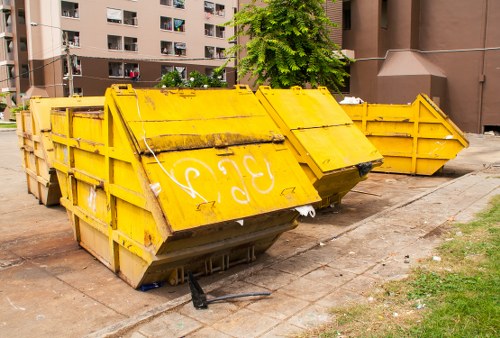 Business Waste Removal Coney Hall is committed to creating an eco-friendly waste disposal area for local firms and organisations. Our approach centres on reducing landfill, boosting reuse and integrating commercial collections into a wider sustainable rubbish area strategy across Coney Hall and the London Borough of Bromley. We work with businesses of all sizes — from high-street shops and cafés to light industrial units — to tailor waste streams so that materials are recovered and reprocessed wherever possible.
Our measurable ambition includes a clear recycling percentage target: we aim to divert 70% of collected commercial waste from landfill into recycling and reuse streams within five years. This target is monitored through regular audits and transparent reporting so local businesses can see the impact of switching to greener waste management. By setting a concrete percentage target we create a benchmark for continuous improvement across the borough.
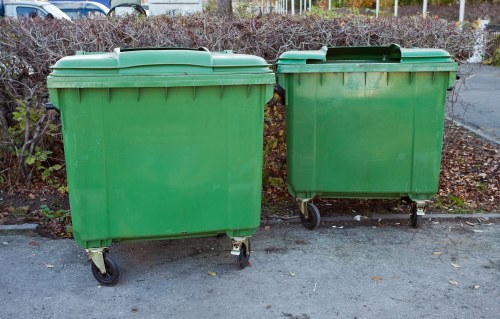
Local Transfer Stations and Efficient Logistics
To maintain an effective sustainable rubbish area, we funnel segregated loads to nearby transfer stations and materials recovery facilities in South London. These include transfer hubs serving Bromley and adjacent boroughs such as Croydon and Sutton. Consolidated collections reduce vehicle movements and ensure that paper, cardboard, glass, metals and WEEE reach specialist processors quickly. Faster routing to dedicated facilities improves recycling rates and lowers contamination, strengthening the circular economy for local materials.We have established strong partnerships with charities and social enterprises to increase reuse and support the local community. Furniture, surplus stock, textiles and working electronics are directed to vetted charity partners and refurbishment groups where they can be refurbished, resold or redistributed. Such partnerships reduce waste handling costs for businesses and extend the life of goods — a key principle in any sustainable rubbish area.
 How partnerships work:
- Furniture reuse — usable office fixtures and furnishings are collected and matched to community housing and charitable projects.
- Textile streams — clothing and soft furnishings are separated for reuse or recycling through accredited textile recyclers.
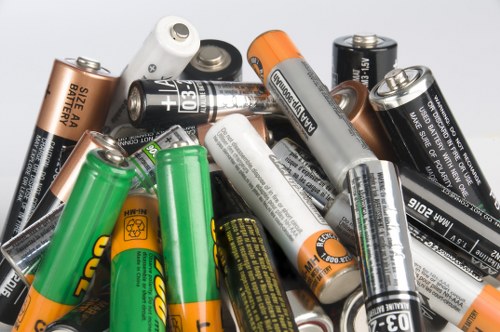
- Electronics (WEEE) — devices are tested and refurbished; irreparable items are responsibly dismantled for parts and precious metals recovery.
We also align with the borough's approach to waste separation: encouraging source segregation into dry mixed recycling, food waste, paper/cardboard and residual streams. The Bromley area emphasises separated food and garden waste collections for householders and a similar philosophy is applied to commercial clients where feasible. By mirroring municipal separation standards in the commercial sector we reduce cross-contamination and increase the value of recyclable material.
Fleet decarbonisation is central to our low-carbon vans programme. Our commercial collection fleet includes electric and low-emission vans for urban rounds and hybrid vehicles for heavier loads, combined with route-optimisation software to cut mileage. These measures reduce local air pollution and shrink the carbon footprint of each tonne of waste managed. We report annual CO2 savings and continually invest in greener vehicles as part of our sustainable rubbish area commitment.
Recycling Activities Relevant to Coney Hall Businesses
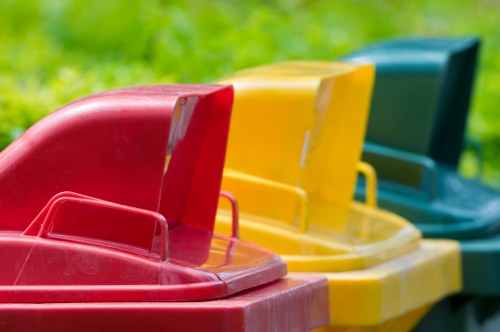
The diversity of commercial activity in Coney Hall means we run multiple recycling streams tailored to common business wastes. Typical activities include:
- Paper and cardboard — retail and office streams baled and sent to paper mills.
- Food waste — composted or anaerobically digested to generate renewable energy.
- Glass and metals — segregated for direct remelt or metal recycling.
- Construction and demolition — segregated aggregates, timber and metals for reuse and recycling.
- WEEE and batteries — specialist handling to recover precious materials and ensure safe disposal of hazardous components.
 Transparency and compliance are part of our service promise. We provide businesses with clear diversion reports, measured recycling rates and recommendations to improve separation at source. Regular waste audits identify opportunities to increase the capture of recyclable fractions and reduce residual waste volumes — keeping the borough’s environmental objectives on track.
In closing, Coney Hall business waste removal is more than a collection service: it is a coordinated effort to create an eco-friendly waste disposal area that supports circular economy principles, partners with charities to maximise reuse, uses low-carbon vans to reduce emissions and targets a 70% recycling rate to drive measurable environmental improvement. By working with local businesses, transfer stations and social partners we create a resilient, sustainable rubbish area that benefits the community and the planet.
