Health and Safety Policy for Business Waste Removal Coney Hall
This policy describes the
health and safety commitments for business waste removal operations serving the wider rubbish company service area. It establishes the principles that govern safe working for staff, contractors and the public during commercial rubbish collection and business waste removal activities. The aim is to reduce risk, prevent injury and protect property while delivering reliable rubbish removal service across the company's service area. All personnel involved in waste removal services must understand and apply these measures consistently.
Scope and Responsibilities
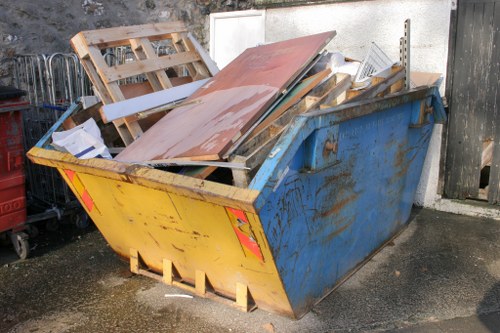
The policy applies to all aspects of waste collection, transfer, storage and disposal activities undertaken by the rubbish removal service and any authorised subcontractors. Responsibilities are allocated as follows: senior management will ensure adequate resources and oversight; supervisors will implement operational controls; and operatives will follow safe systems of work. Everyone is expected to report hazards and participate in risk reduction. This document covers routine collections, bulky waste removal, skips, and temporary storage on client sites within the waste removal service area.
Policy Objectives
Our key objectives are to:
- Prevent work-related injury and ill health during commercial rubbish collection and business waste removal operations.
- Ensure compliance with applicable health and safety standards relevant to waste management in the service area.
- Provide training, equipment and supervision so tasks are completed safely and efficiently.
- Maintain equipment and vehicles to safe operational standards.
Risk Assessment and Operational Controls
Risk assessments are carried out for all routine tasks and for new or changed work. Controls follow a hierarchy: elimination, substitution, engineering controls, administrative measures and personal protective equipment (PPE). Examples include route planning to minimise manual handling, vehicle loading limits, segregation of recyclables and hazardous items, use of mechanical aids and clear traffic management at collection points in the rubbish company service area. Risk assessments are recorded and reviewed when conditions change.
Training, Competence and PPE
Staff competence is fundamental. All employees receive induction training, task-specific instruction and periodic refresher courses.
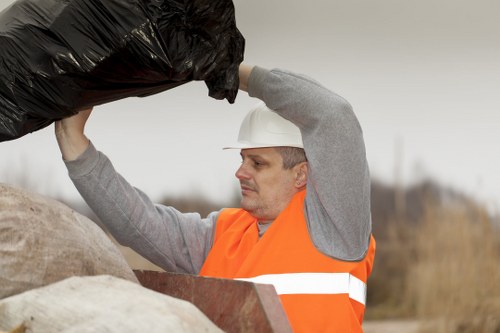
Supervisors must verify that operatives are competent before assigning work. Personal protective equipment is provided as required and includes high-visibility clothing, gloves, safety footwear and eye protection. The use of PPE is mandatory where assessed controls indicate it is necessary, and it is the operative's responsibility to wear and maintain issued items.
Training records are retained and evaluated as part of continuous improvement.
Hazardous and Special Waste Handling
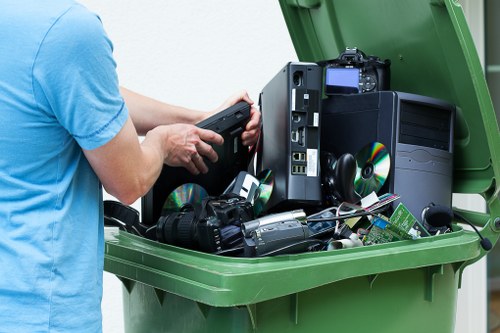
Where hazardous or special waste is encountered—such as asbestos-containing materials, chemical containers, sharps or contaminated loads—operations will follow designated segregation and handling procedures. The following controls apply:
- Stop and assess any suspicious or hazardous item; do not proceed without a safe plan.
- Use appropriate containment, labelling and documentation for hazardous consignments.
- Engage authorised hazardous waste contractors where specialist removal or disposal is required.
Incident Reporting and Emergency Response
All incidents, near-misses and dangerous occurrences are to be reported immediately through the company's incident reporting system. Prompt reporting enables investigation, root cause analysis and corrective actions to prevent recurrence. Emergency procedures are in place for vehicle collisions, spill response, fire and medical emergencies. These procedures include safe isolation, first aid, notification of emergency services and preservation of evidence for incident review.
Monitoring, Audit and Contractor Management
The company conducts routine inspections, performance monitoring and periodic audits to ensure compliance with this policy.
Contractors and subcontractors engaged to provide rubbish removal or ancillary services are required to demonstrate equivalent health and safety standards and provide relevant documentation before work begins. Performance metrics, vehicle maintenance records and training documentation are reviewed to support continual improvement. Corrective actions from audits are tracked to completion.

Policy Review, Communication and Approval
This policy is communicated to all staff, displayed where appropriate and made available to clients and partners in the rubbish removal service area as a statement of our commitments. It will be reviewed at least annually or following significant operational change, incident or legislative update. The senior leadership team endorses this policy and is responsible for allocating resources to maintain health and safety standards.
Adherence to this policy is mandatory for everyone involved in business waste removal operations, and ongoing compliance will be verified through training, audits and supervisory checks.
